The workforce analytics AI market, which includes talent forecasting, performance optimization, and retention tools, is projected to grow from $2.84 billion in 2024 to about $16.48 billion by 2033 at a ~20.1% growth rate.
Artificial intelligence is no longer a dream-yet it is presently transforming the way organizations recruit, conduct business, analyze and develop. AI in the workplace has transformed to become a business skill and capability as the use of automated hiring tools to predictive analytics became part of workplace technology. But due to the increased pace of adoption of AI, the question that is burning for businesses is, what to automate and what to leave human-led?
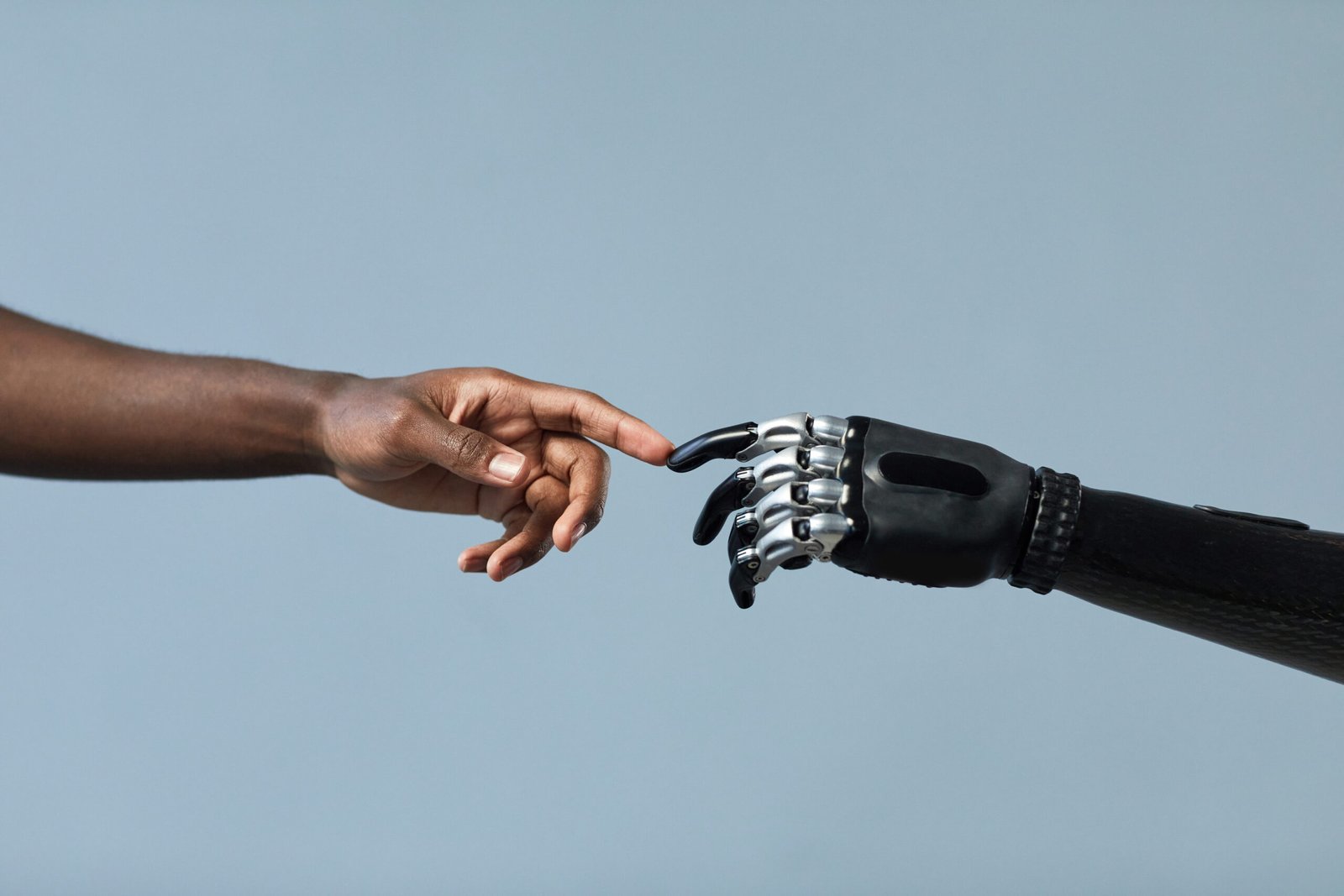
The discussion on the topic of AI and the transformation of the workforce is not about the complete replacement of people. Rather, it is a question of new roles, new levels of efficiency, and creating a balanced human working environment in which technology does not eliminate human potential, but enhances it. This balance is critical to workforce planning in modern times, sustainable development, and sustainability in the long-term competitiveness.
In this blog, we will look at the actual distinction between AI and the human workforce, what businesses ought to automate and how leaders can strategically incorporate workforce AI without sacrificing the human factor which leads to innovation and culture, as well as trust.
The Emergence of AI in the Workplace.
In the last 10 years, AI has been creeping into almost any business operation. What began as simple automation has grown into machine learning, natural language processing and predictive intelligence. Today, AI in the workplace can:
- In a few minutes, screen thousands of job applications
- Project demand and staffing requirements
- Automate the routine activities
- Give instant feedback to decision-makers
This fast usage has compelled firms to redefine workforce planning approaches. Dynamism is driving away the traditional workforce models which are based on fixed roles and long term projections, towards dynamic models where human beings and AI operate together.
Nevertheless, the difficulty is in the ability to comprehend that there is no single-size-fits-all AI and workforce integration. Withdrawal of the human touch in the wrong areas can negatively affect the morale of the employee, destroy customer confidence, and coherent organizational culture.
Understanding the Human Workforce Advantage
Businesses should also understand what human beings excel in before making a decision on what to automate. Human workforce introduces those characteristics that AI is yet incapable of delivering on the mass level:
- Emotional intelligence
- Ethical reasoning
- Creativity and innovation
- Complex problem-solving
- Relationship-building
The human workplace can be strong by trust, collaboration and purpose which are aspects that are entrenched in human interaction. Such platforms as Workhuman are based on focus and recognition, empathy and leadership that are people-centered, which confirms the theory that technology must work with people, and not substitute them.
Businesses that lose track and automate their operations just to cut costs run the risk of disengaged individuals and unstable operations.
What Do Human Resources Do in an AI-Driven Organization?
One of the misunderstandings is that AI will substitute HR completely. As a matter of fact, the question is what the human resources are doing when AI is doing administration?
The contemporary HR specialists are concerned with:
- Strategic human resources planning
- Employee engagement and employee retention
- Culture development
- Leadership coaching
- Change management
Workforce AI enables the HR department to abandon manual operations and concentrate more on people strategy. AI is an auxiliary rather than a replacement.
For example:
- AI studies the trends of attrition
- HR formulates initiatives to enhance retention
- AI tracks performance data
- HR offers coaching and development
This alliance enhances the AI and workforce relationship instead of establishing rivalry.
What Businesses Should Actually Automate
The successful automation depends on the ability to focus on the right tasks. Friction should be eliminated through automation instead of the meaning of work being eliminated.
1. Monotonous and Programmed Activity
Automation is the best in situations where the tasks involved are governed by clear rules and demand little judgment.
Examples:
- Data entry
- Payroll processing
- Invoice management
- Attendance tracking
Workforce AI has helped automate these processes, which minimize mistakes, time, and gives employees more work to do of higher value.
2. Analysis and Forecasting of Data
AI is effective in working with large amounts of data and marketing tendencies.
Businesses should automate:
- Forecasting demand of workforce
- Sales and productivity analysis
- Skills gap identification
In the planning of the workforce, AI assists leaders to foresee the future talent requirements instead of responding too late.
3. Resume Screening and Shortlisting of Candidates
One of the most frequent applications of AI in the workplace is recruitment.
AI can:
- Scan applications on desired skills
- Evolve a match between the candidates and the job descriptions
- Reduce hiring time
But, humans must always be engaged in final hiring decisions to be fair, culturally oriented, and ethically judgmental.
4. Customer Support (Tier 1)
Chatbots and AI assistants can be very useful when it comes to addressing the most simple queries on the part of the customer.
Automate:
- FAQs
- Appointment scheduling
- Order tracking
The human place of work should be managed by human agents through emotional, complex, or high value interactions to maintain the human experience of the workplace.
What Should Not be Automated Completely
As much as AI is powerful, there are some aspects that cannot be handled by humans.
1. Decision-Making and Leadership
AI will be able to give hints, not to answer accountability, vision, and moral responsibility. Human judgment and experience are needed in strategic decisions.
2. Employee Relations and Conflict Resolution
Dealing with conflict at the workplace requires sympathy and situational insight. Automation of these interplays poses a threat of a cold and transactional environment.
Here, human work ethics such as recognition, appreciation and human connection come into play.
3. Creativity and Innovation
Innovation is possible with AI helping but it is human curiosity, lived experience, and collaboration that can lead to true innovation.
Artificial Intelligence vs. Human Workforce: Comparison Chart.
A short comparison has been made to explain the areas where automation is effective.
| Business Function | AI Strength | Human Strength | Best Approach |
|---|---|---|---|
| Data Processing | Speed & accuracy | Interpretation | AI-led, human-reviewed |
| Hiring | Resume screening | Final decision | Hybrid |
| Customer Support | Instant responses | Empathy | Tiered approach |
| Workforce Planning | Forecasting trends | Strategic judgment | AI + leadership |
| Performance Reviews | Data insights | Coaching & feedback | Human-led |
| Culture Building | Analytics | Emotional connection | Human-driven |
This graph shows that the combination of AI and workforce is more effective when the roles are not overrode, but distributed fairly.
The Uses of Workforce AI in Workforce Planning
The contemporary workforce planning is not effectively a question of headcount anymore. It consists of skills, flexibility, and readiness of the future.
The workforce AI assists in planning by:
- Predicting skill shortages
- Mapping internal talent flow
- Determining reskilling opportunities
- Promoting goals of diversity and inclusion
Nevertheless, leaders should make sure that AI systems are clear and impartial. The AI, which is designed poorly, may perpetuate inequality and hurt human workplace trust.
The Workplace AI Ethical Implications
Ethical responsibility is a fundamental leadership issue as AI gains more and more prominence at work.
Key considerations include:
- Data privacy
- Bias in AI algorithms
- Issues of employee surveillance
- Openness in decision making
Companies need to explain in a clear manner the uses and reasons of AI. Employees will find it easier to adopt AI when they realize that it helps them instead of posing a threat.
Developing an AI Strategy that is Human-Centered
The most successful organizations consider AI as a partner.
A strong strategy includes:
- Clear automation goals
- Employees participation in AI adoption
- One-on-the-job training schemes
- The AI decision-making under human control
The strategy builds trust, enhances performance, and maintains a good AI and workforce relationship.
Future of the Human Workplace
AI is not going to replace humans, but rather enhance them.
Companies that thrive will:
- Automate intelligently
- Invest in people
- Restructure jobs, do not abolish them
Adopt new platforms and philosophies such as Workhuman in order to maintain recognition and purpose.
According to a report:
The AI in the workplace market, encompassing automation, productivity tools, and AI-driven enterprise workflows, is expected to expand by USD 206.5 billion with a CAGR of ~21.3% through 2029.
Automate Your Business With Markeltree
The debate between AI and the human labour force does little to capture what the problem is. Automation does not mean eliminating people, it comes with the power. Organizations can achieve workforce productivity without compromising humanity by knowing what human resources do, strategizing workforce AI, and focusing on ethical AI in the workplace.
Smart workforce planning combines the power of informed judgment and information. The winning companies will be the ones that ensure that the balance is maintained between technology and people, so as to make sure that the future of work is innovative, inclusive, and highly human. Markeltree offers professional advice and solutions on how to integrate AI in a responsible and effective manner to businesses interested in applying intelligent AI and workforce strategies and still have a strong human place of work.
Leave a Reply